Prepare To Perform
Strength & Conditioning, Field SportsFoundation Block 2 builds on the pillar strength, movement competency, and training tolerance established in Foundation Block 1.
This phase increases training density and total work capacity while maintaining technical quality and controlled intensity. Strength training continues to emphasise foundational push and pull patterns, with slightly higher volume and tighter execution demands, but without rushing expression or maximal loading.
Energy System Development (ESD) is now introduced as a deliberate and consistent component of the block. Aerobic work is prioritised to improve recovery capacity and tolerance to training load, using low-intensity, cyclical modalities performed at controlled effort. ESD progression occurs primarily through duration and consistency, not intensity, and is structured to support — not compete with — strength quality.
Movement skill progressions expand gradually, introducing more complex linear and multidirectional tasks where appropriate. Elastic, lateral, or higher-intensity movement drills may be introduced only once specific lower-limb strength and control criteria are met, and remain tightly constrained.
Foundation Block 2 serves as the bridge between early foundational training and later phases of general strength, running-based conditioning, and sport-specific preparation, ensuring athletes are not only stronger, but better able to tolerate and recover from increased training demands.
1 sessions per week
Must use App app to view and log training
Program Training


Prep
A
Movement Prep - Lower Body Push + Pillar Control
Movement Prep (8–10 min) 1. 90-90 Wall Breathing 4–5 slow breaths Ribs soften down, pelvis heavy 2. Quadruped Rock Back 2 × 6 Neutral spine, hips move without shape change 3. Heels-Elevated Bodyweight Squat 2 × 5 Even foot pressure, smooth depth 4. Split Squat ISO (Short Hold) 2 × 10–15s each side Tall torso, quiet back knee 5. Front Plank Shoulder Taps (Slow) 2 × 6 each side No trunk shift
B1
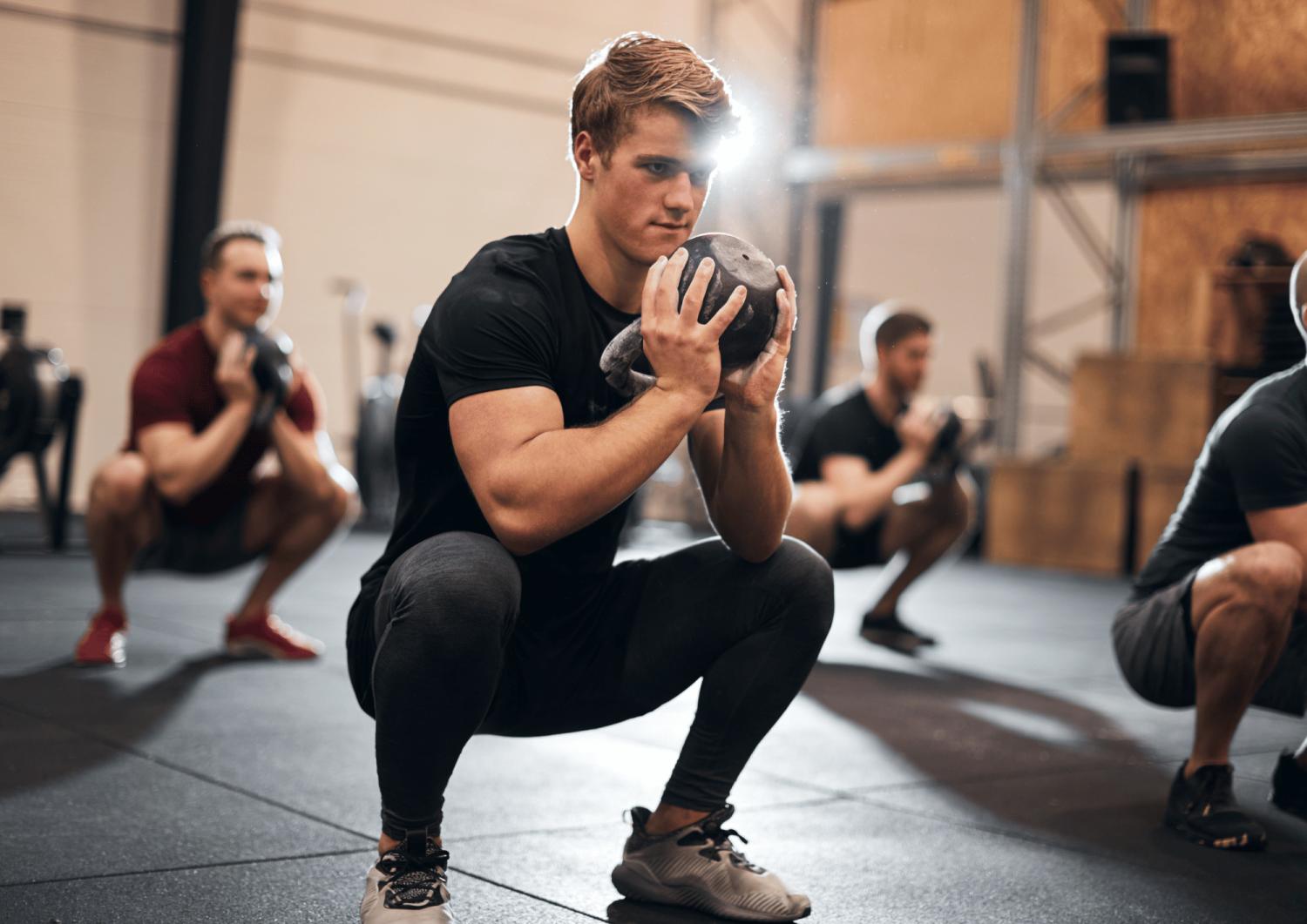
Goblet Squats
4 x 8
B2
Half-kneeling cable lift
4 x 12
C1
Bulgarian Split squat
3 x 6
C2
Suitcase Carry
3 x 30
D1
Band Resisted Front Plank Pull
20, 25, 30
D2
90-90 Wall Breathing
3 x 5
Conditioning
A
Aerobic Capacity (Cyclical)
Prescription Mode (choose one): Bike Incline treadmill walk Rower (light) Easy jog (only if you are already running comfortably) Intensity RPE 4–5 / 10 Nasal breathing possible Able to talk in full sentences Duration Week 1: 20–25 min Week 2: 25–30 min Week 3: 30–35 min Week 4: 30–40 min (cap) Notes for TrainHeroic “Smooth, steady effort. You should finish feeling better than when you started.”
Prep
A
Movement Prep - Upper Push / Pull + Anti-Rotation
Movement Prep — 8–10 min ESSENTIAL (May be condensed to ~5–6 min) 1. Supine Breathing with Reach – 4 breaths 2. Wall Posture Hold – 30–45 s 3. Scap Push-Ups – 2 × 6–8 4 .SA Band Row & Reach – 2 × 6 5. Tall-Kneeling Pallof Hold – 2 × 15–20 s/side
B1
DB Bench Press
4 x 6
B2
Tall kneeling Pallof Press
4 x 16
C1
Chest-Supported DB Row
3 x 8
C2
Half Kneeling Landmine Press
3 x 12
D1
Scap Push-Up
10, 9, 8
D2
Diaphragmatic breathing reset
2 x 6
Conditioning
A
ESD Session 2 — Aerobic + Light Rhythm
Prescription Option 1 — Continuous Same as Session 1, different modality Option 2 — Broken Continuous (preferred for team settings) 5 min easy 5 min slightly quicker Repeat 3–4 rounds Intensity Still RPE 4–5 No breathlessness No leg burn Duration 25–35 min total “This is not conditioning. If you’re breathing hard, slow down.”
Conditioning
A
Movement Prep - Isometric Force + Upper Pull Bias
ESSENTIAL Crocodile Breathing – 4–5 breaths Core-activated Hip Flexor stretch – 2 × 5/side Split Squat Pulse → Hold – 3 pulses, then hold for 1 breath cycle. Repeat for the other side. Band Row ISO Hold – 2 × 10–15 s Side Plank (Short Lever) – 2 × 15–20 s/side
B1
Isometric split squat hold
30, 25, 20
B2
Tall kneeling halo
3 x 12
C1
Lat Pulldown
8, 7, 6, 6
C2
DNS star plank with reach
D
Reach, roll and lift
3 x 8
Conditioning
A
Movement Prep - Locomotion Strength + Pillar Integration
Movement Prep — 8–10 min ESSENTIAL 1. Standing Breathing with Arm Swing – 4–5 breaths 2. Ankle Rock + Heel Raise – 2 × 6–8 3. Wall Marching Hold– 2 × 10 s/side 4. Low Step-Through Lunge – 2 × 4/side 5. Light Suitcase Carry – 2 × 15–20 m/side
B1
Sled Push
25, 20, 15, 15
B2
Goblet March
B3
KB Farmer's Walk
30, 25, 20, 20
C1
DB Step Up
3 x 12
C2
Glute bridge march on bench with band hold
3 x 8
D
Tall Kneeling Cable Chop
3 x 16