

Breacher Up Bodybuilding and Conditioning
Breacher Up Fitness
Tactical / Military, Tactical, Bodybuilding, Strength & Conditioning, Powerlifting, General Fitness, Combat Sports, Weightlifting, Law Enforcement, Power Sports , Multi-sportBreacher Up Hybrid Strength and Conditioning
Built for Strength. Engineered for Endurance. Prepared for Life.
Breacher Up Hybrid Strength and Conditioning is a comprehensive performance program designed to develop strong, capable, and resilient athletes who can perform under pressure. Whether you're a first responder, military service member, tactical athlete, or someone committed to becoming harder to kill and better prepared for life's challenges, this program delivers the tools needed to build real world fitness.
Unlike traditional powerlifting or endurance only programs, Breacher Up Hybrid combines the best aspects of strength training, hypertrophy development, and endurance conditioning into a single, progressive training system. The result is an athlete who is not only stronger but also capable of moving efficiently over long distances and sustaining performance when fatigue sets in.
What the Program Develops
Maximum Strength Build powerful movement patterns through the major compound lifts including the squat, bench press, deadlift, and overhead press. Structured progression models help increase absolute strength while improving overall athletic performance.
Muscular Size and Durability Develop functional muscle mass through targeted hypertrophy training. Increased lean muscle improves force production, injury resistance, work capacity, and long term physical resilience.
Running Performance Progressively improve aerobic capacity and running efficiency through structured distance running, tempo runs, intervals, and endurance focused training. Whether preparing for a fitness test, academy, selection course, or personal challenge, you'll build the engine required to perform.
Who It's For
Military personnel, Law enforcement officers, SWAT operators, Firefighters and EMS professionals, Academy recruits, Tactical athletes, Everyday individuals who want to be stronger, healthier, and more capable.
The Mission
The mission of Breacher Up Hybrid Strength and Conditioning is simple: create athletes who are strong enough to move heavy weight, durable enough to withstand the demands of training and life, and conditioned enough to go the distance when it matters most.
Build Strength. Add Muscle. Go the Distance.
Breacher Up. Stay Ready.





Prep
A
Daily Devotional 7
Daily Bible Reading: Exodus 23:12 Leadership Lesson (Rest Day): Evaluate your moral margin. Devotional: After navigating the detailed laws and the severe cost of sin in the past week, this rest day is a good time to stop and evaluate your moral margin. In accounting, margin is the buffer between your cost and your revenue. In life, moral margin is the buffer between your capacity and your temptation. It's the emotional, relational, and spiritual space you build that prevents you from making poor, impulsive decisions. When leaders get tired, lonely, or overcommitted, their moral margin often shrinks or even disappears. This is when small compromises—the little lies, the ethical slips, the shortcuts—begin to look attractive. The Bible is full of stories of great leaders who failed not because of a momentary mistake, but because of a long-term, slow-burning attrition of their moral margin. Ask yourself honestly: What is currently draining my margin? Is it an impossible workload? A toxic relationship? A hidden addiction? A lack of spiritual discipline? Stop the bleeding today. Rest isn't just about recovering energy; it's about re-establishing your moral boundary lines so that you are prepared for the temptation that could be just around the corner. Reflection Questions: What single commitment can you shed today to immediately increase your moral margin for the coming week? If you were forced to confess your biggest ethical blind spot to your team, what would it be? Use that to inform your rest today. Prayer: God, reveal to me where my moral margin has eroded. Guard my heart against the compromises that lead to catastrophic failure. Give me the wisdom to set healthy boundaries and the discipline to rest, so that I can lead from a position of moral strength, not vulnerable exhaustion. Amen.
1/2 Marathon Prep
A
Easy Run 5 min slow jog 1.4 Mile Run 5 min slow jog
General Fitness
B
5 min warm up jog -then 6 rounds- 800 m run 200 m jog/walk -then- 5 min cooldown walk
Prep
A
Daily Devotional 1
Daily Bible Reading: Leviticus 7-10 Leadership Lesson: Be aware of the danger of unauthorized fire. Devotional: In the midst of the Tabernacle's dedication, a terrifying incident occurred: Aaron’s sons, Nadab and Abihu, offered "unauthorized fire" to the Lord, and they were immediately consumed by the fire of judgment. Their death was a stark lesson on the danger of “unauthorized fire.” Their mistake was due to their disregard for sacred protocol. They likely felt their way was faster, more spontaneous, or more exciting than the prescribed way. They tried to be creative in an area where God had commanded consistency. The lesson for every leader is that in the pursuit of results, you must never compromise essential processes or principles. "Unauthorized fire" in leadership is when you: Try to achieve a good end through corrupt means. Use shortcuts to bypass foundational ethical requirements. Let personal flair override the established, proven, shared standards of the organization. The end doesn’t justify the means. People shouldn’t be allowed to do whatever they want in the name of individuality or autonomy. While there needs to be some degree of flexibility and freedom built into your processes, you are all still part of a team—and teams need protocol and structure to protect and empower everyone. Your mission is only as strong as your commitment to the principles that govern it. As a leader, part of your job is to use “authorized” fire by insisting on integrity, following the proper process, and demanding fidelity to the code of conduct. Reflection Questions: Where have you recently been tempted to use an "unauthorized fire"—a shortcut, a compromise, or a dishonest strategy—to achieve a desired result? What are the "sacred protocols" (the ethical non-negotiables) in your team that you must reinforce and protect this week? Prayer: God, protect me from the seductive temptation of unauthorized fire. Help me to be a leader who honors Your process, Your standards, and Your Word above all else. Give me the patience and integrity to insist on the right way, even when the wrong way seems faster or more exciting. Amen.
B1
Crunch
20, 25, 30
B2
Feet Up DB Bench Press
20, 25, 30
B3
Cable Facepull
20, 25, 30
C1
Tempo Close Grip Incline Bench Press
4 x 5
C2
Ring Rows
4 x 10
D1
Banded DB Bench Press
4 x 12
D2
Pull-Up
4 x 6
E1
Hammer Curl Gun Walk
4 x 30
E2
DB Roll Back
4 x 14
1/2 Marathon Prep
A
30 Minute cardio machine of choice
General Fitness
B
50 minute easy jog
Prep
A
Daily Devotional 1
Daily Bible Reading: Exodus 27-30 Leadership Lesson: Leaders are clothed in excellence. Devotional: Exodus 28 describes the intricate robes designed for the priests, especially Aaron. The clothes were beautiful and made of fine linen, gold, and precious stones, complete with an ephod and a breastpiece. The instructions were meticulous because the garments represented the dignity of the office. The priests were to be "clothed in excellence" when they stood before God. This is a powerful illustration for organizational excellence. As a leader, you don’t wear a breastpiece of twelve stones, but you are clothed in the standard of excellence you set for your team. Every task—from the highest-level presentation to the simplest email—reflects the dignity you give to the mission. This doesn't mean you need to be flashy or expensive. Instead, it means being intentional and meticulous. It means refusing to do a job half-heartedly just because it's behind the scenes. It means putting thought into the clarity of your communication, the quality of your product, and the care in your service. If you accept sloppiness in small things, you breed mediocrity in everything. The leader who accepts an average presentation will eventually get an average product. Your leadership attire is your commitment to quality. When your team sees you demand excellence in the small details, they learn that the work is sacred. Let your presence as a leader and the output of your team be clear statements that the mission you serve is worthy of the best you have to offer. Reflection Questions: In what area of your work have you been letting the standard slip because you felt the task was "minor" or "behind the scenes"? What is one practical detail of your work that you can elevate today to embody a greater commitment to excellence? Prayer: God, I pray for a renewed commitment to excellence. Forgive me for settling for "good enough" when You call me to my best. Help me to lead with meticulous care, ensuring that every output of my team reflects the dignity of the mission You have given us. May my standards be high for the glory of Your Name. Amen.
B1
Banded Russian KB Swing
3 x 10
B2
Yox Shrug
3 x 12
C
Seated Box Jump
5 x 3
D
Sumo Deadlift
5 x 3
E
Pendlay Row
3 x 8
F
Single Arm Banded KB Farmer Carry
2 x 60
G1
Back Extension
1 x 60
G2
DB Shrug
1 x 60
Prep
A
Daily Devotional 4
Daily Bible Reading: Leviticus 15-18 Leadership Lesson: Accountability starts at the top. Devotional: Leviticus 16 describes the Day of Atonement (Yom Kippur), the single most important day in the Hebrew calendar. This day wasn't about the people atoning for themselves; it was about the High Priest atoning for himself, his family, and then the entire community. The atonement had to begin at the very top of the leadership structure. The lesson here is that accountability starts at the top. Leaders have to address their own sin and weakness first, before they can lead the moral cleansing of the team. When a crisis hits your organization, your first move should be to investigate your own heart and leadership. What did your failure to create a boundary, your lack of clarity, or your own moral compromise contribute to the situation? A common leadership failure is to use positional authority as a shield against personal accountability. The greatest leaders, however, use their position as a vantage point to better analyze their own actions. They recognize that their personal integrity is the foundation for the entire team’s integrity. If you want a culture of accountability, you must model it first. Be the first to admit when you are wrong. Be the first to take responsibility for a shared failure. Be the first to undergo the "cleansing." By accepting a higher standard for yourself, you create the moral authority necessary to lead your people to a higher standard as well. Reflection Questions: When was the last time you publicly admitted a mistake and modeled accountability to your team? What is one area of personal failure or struggle that is currently undermining your ability to demand accountability from others? Prayer: God, make me the first to submit to accountability. Help me to see my own failings with clarity before I judge the failures of others. Give me the humility and strength to cleanse my own heart and leadership so that my commitment to integrity becomes the moral foundation for my organization. Amen.
Circuit
B
Every 3 Minutes on the Minute for 30 Minutes 300m Shuttle Run (50m lengths)
C
Cardio
1 x 30:00
1/2 Marathon Prep Option
A
Easy Run 5 minute warm-up jog -then- 1.2 Mile Run at a conversational pace 90 second walk 1.4 Mile Run at a conversational pace -then- 5 minute cool down jog
General Fitness Option
B
2 Rounds: 2 mile run 4 minute walk
Prep
A
Daily Devotional 1
Daily Bible Reading: Leviticus 19-22 Leadership Lesson: Proximity demands a higher standard. Devotional: Leviticus 21 and 22 lay out strict laws for the priests, those who were closest to the Tabernacle and its sacred duties. The laws governing their behavior, their diet, and their relationships were more demanding than those given to the average Israelite. Why? Because proximity to the sacred demands a higher standard. The lesson for every person in a high-level position is that your proximity to the mission, the vision, and the power requires a non-negotiable, elevated code of conduct. The higher you rise in leadership, the less margin you have for error. Your casual comments are taken as policy. Your small compromises are magnified into systemic failures. This means you must voluntarily choose a stricter standard for your own life. While the average team member might have wiggle room, you, as the leader, do not. Your language must be cleaner, your ethics firmer, your boundaries stricter, and your commitment to the vision more disciplined. Why? Because your life is the living standard of the organization. If the High Priest is sloppy, the entire people will assume sloppiness is acceptable. The people who are closest to the mission—the senior leaders—must be the most committed to the mission's values. Don't resent the higher standard. Embrace it. The closer you get to the heart of the mission, the more committed you must be to the character required to sustain it. Reflection Questions: What is one standard of excellence or behavior that you can voluntarily adopt this week that is higher than what you demand of your team? What "small" habit or behavior are you allowing in your private life that would compromise your public authority if it were exposed? Prayer: God, I accept the high standard that comes with my position. Help me to lead with humility, knowing that my proximity to power is an invitation to greater scrutiny. Strengthen my resolve to maintain uncompromising integrity in all things, great and small, so that my life becomes a model for the commitment I expect from my team. Amen.
B1
Incline Hex Press
15, 20, 25
B2
Crunch
15, 20, 25
B3
Band No Money's
3 x 10
C1
Close Grip Floor Press
3 x 10
C2
Pause Lat Pull Downs
3 x 8
D
DB Floor Press
3 x 14
E1
Incline DB Y Raise
3 x 12
E2
DB Lateral Raise
3 x 14
E3
Chest Supported Band Pull Apart
3 x 16
F1
Plank
3 x 0:40
F2
Overhead Plate Sit-Up
3 x 15
1/2 Marathon Prep
A
30 minute cardio machine of choice
General Fitness Run
B
50 minute jog
Prep
A
Daily Devotional 1
Daily Bible Reading: Leviticus 23-26 Leadership Lesson: Design rhythms of pause and reset. Devotional: Leviticus 23 details the Feasts of the Lord—regular, mandated times of rest, remembrance, and celebration. Leviticus 25 introduces the Sabbatical Year and the Year of Jubilee, revolutionary concepts that required the people to reset their entire economic system every seventh and every fiftieth year. Here is the lesson: Great leaders design rhythms of pause and reset. These rhythms are structural requirements for long-term health. The Year of Jubilee—when debts were forgiven, and land was returned—was a society-level reset that prevented permanent poverty and allowed everyone a chance to start over. What "feasts" do you have in your organization? Are there regular, non-negotiable times built into your year to stop, celebrate the wins, and remember the mission? If your organization is just one long, continuous push, you are setting yourselves up for burnout, not a breakthrough. Do you have "jubilees" designed into your business model? Are there mechanisms to reset toxic debt, forgive a failure, or allow a talented but stalled team member to start fresh? A system that never forgives failure and never provides a reset will end up crushing the people within it. Your job as a leader is to design the tempo of the work, not just the scope. You must proactively create the time to pause, reflect, and reset the score. Rhythms of rest protect you from the tyranny of the urgent. Reflection Questions: What is one new, mandatory "Feast" (a celebration or mandated team rest day) you can implement for your team in the next quarter? Where does your current system need a "Jubilee" moment—a chance to reset a debt, forgive a failure, or allow a new beginning? Prayer: God, give me the foresight to design rhythms of pause and reset. Help me honor the Sabbath in my personal life and build "Jubilees" into my professional life. Deliver me from the arrogance of perpetual motion and teach me that the greatest endurance is found in consistent rest and intentional reset. Amen.
B1
DB Step Up
3 x 12
B2
DB Side Bend
3 x 20
B3
Crunch
3 x 20
C
Tempo/Pause Front Squat
5 x 3
D
Wall Balls
4 x 15
E
Goblet Squat
3 x 45
F
Seated Leg Curls
1 x 66
1/2 Marathon Prep
A
Easy Run 5 minute warm-up walk 1.8 Mile Run at a conversational pace 5 minute cool down walk
General Fitness
B
10 min warm up jog -then 4 rounds- 6 min zone 2 run (conversational pace) 4 min zone 3 run -then- 10 min cooldown jog/walk
Prep
A
Daily Devotional 1
Daily Bible Reading: Leviticus 27, Numbers 1-3 Leadership Lesson: Value comes from dedication, not emotion. Devotional: Leviticus 27 is an unusual chapter that deals with the redemption of things and people dedicated to God. If a person dedicated property to the Lord but later wanted it back, there was a strict price for its redemption. The value of the dedicated item was not determined by the person's emotional attachment but by a fixed, objective assessment by the priest. The lesson for us is this: Value comes from dedication, not fleeting emotion. In leadership, we often confuse effort with value. We might want a project back because we put a lot of emotional energy into it, or we value an employee based on our current feelings rather than their objective, long-term performance. This chapter reminds leaders to use an objective standard. As a leader, you must develop the discipline to step back and conduct an objective assessment. Is a current project truly worth redeeming based on its long-term potential, or are you fighting for it because of the emotional energy you have already sunk into it (the sunk cost fallacy)? Are you judging your team's value based on a recent positive interaction or on their consistent, objective contribution to the mission? Your leadership decisions must be based on a clear, objective assessment of value and dedication. Don't let your emotions cloud the cost of a decision. Reflection Questions: What current project or relationship are you overvaluing because of the emotional energy you've invested (the "sunk cost")? If you had to conduct an objective, emotion-free assessment of your team's two biggest current projects, which one is most worth redeeming? Prayer: God, give me the objective clarity of the priest in assessing value. Deliver me from making decisions based on sentiment or sunk cost. Help me to value dedication and long-term worth, and give me the courage to redeem what is truly valuable and release what is not. Amen.
B1
DB Bicep Curls
3 x 15
B2
Cable French Press
3 x 15
C
Pause Hammer Curl
10, 8, 6, MAX
D
Decline DB Roll Back
14, 12, 10, MAX
E
Preacher Curl
14, 12, 10, MAX
F
Tricep Pushdown
14, 12, 10, MAX
G
Barbell Flexion Wrist Curl
35, 30, 25
 Jeremy Hunt
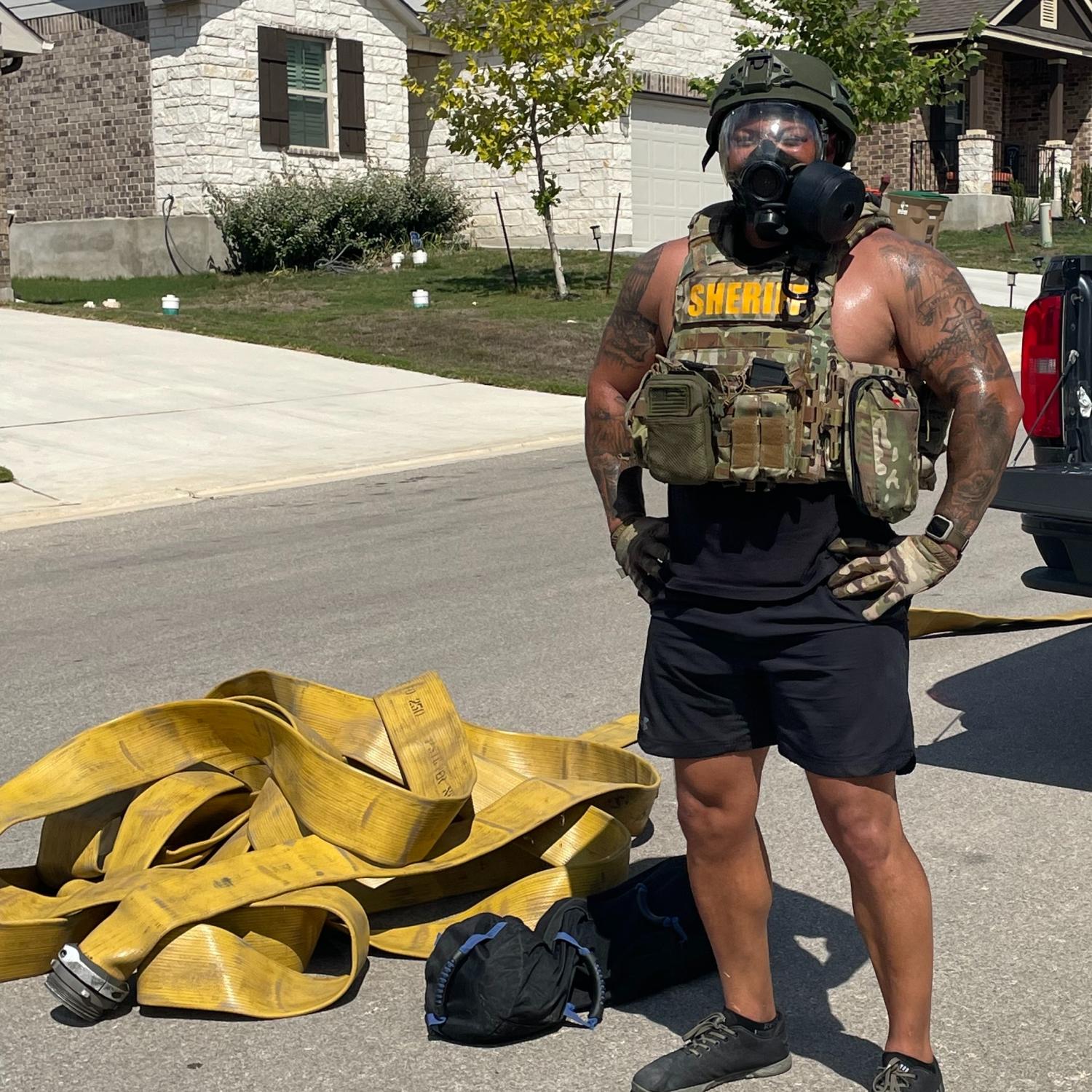
Coach Hunt is an active SWAT breacher and military service member with more than 15 years of experience in the tactical community. He has developed performance programs for police departments, SWAT teams, and military units across the country. His mission is to help others build elite levels of strength, speed, endurance, for tactical performance and everyday life.
When you join a team you’re getting more than programming, you’re joining an online community.
Breacher Up Bodybuilding and Conditioning
 Breacher Up Bodybuilding and Conditioning
 Breacher Up Bodybuilding and Conditioning