
Strong and Stable: Help Your Hypermobile Body Build Strength and Stability
Kateprofitness
Mobility, Functional Fitness, WeightliftingIf you've ever felt like your body doesn't fit into traditional fitness advice, you're not imagining it.
Most strength programs are built for the average body. They assume your joints naturally stop where they're supposed to, that balance comes easily, and that progressing simply means adding more weight or more reps.
But if you're hypermobile, your experience of movement can be very different.
You might feel strong one day and unstable the next. You might constantly hear that you should "stretch less and strengthen more," but no one has ever explained how. Maybe you've tried gym programs that left your joints feeling irritated, or you've avoided strength training altogether because you weren't sure what was safe for your body.
This program was created for you.
It's designed for people with hypermobile bodies who want to build strength, improve joint stability, and feel more confident in how they move - without pushing through discomfort or following a one-size-fits-all plan.
Together, we'll focus on building strength in a way that prioritizes control before intensity, quality before quantity, and long-term progress over quick results. You'll learn how to create stability through movement, improve your awareness of where your body is in space, and develop strength that supports you both inside and outside the gym.
What makes this program different is that it wasn't adapted for hypermobile people - it was built from the needs of hypermobile bodies.
Every exercise, progression, and coaching cue has been chosen with the unique challenges of hypermobility in mind. Rather than asking you to fit into a traditional strength program, this program meets you where you are and teaches you how to build a foundation that feels strong, stable, and sustainable.
You'll also understand why you're doing what you're doing. Because when you understand your body, you're able to make better decisions, train with more confidence, and continue progressing long after the program is over.
Whether you're completely new to strength training, returning after injury, or simply looking for an approach that finally makes sense for your body, this program will give you the tools to move with more confidence, build lasting strength, and trust your body a little more each day.


Prep
A
Warmup: 5 full breath cycles (full breath = inhale and full exhale) A1) 90/90 Supine Breathing (Hamstrings and IR bias) - focus on breathing into the bra band, press feet against the wall, pull heels down slightly, feel the hamstrings engage, keep pelvis neutral (don't squeeze the glutes and don't press the lower back into the floor), as you reach the hands up keep the shoulders away from the ears. If needed, add a soft ball between the thighs to get the adductors on board. We should learn to create tension in the trunk so that we can keep the spine stable and let other parts of the body relax . A2) 90/90 Side Lying Breathing Lat Expansion bias - focus on breathing into the back body and laterally (so that the lower ribs expand as you breathe), glutes relaxed, lower back neutral, core engaged, neck relaxed, head supported. A3) Arm Bar w/Band (Shoulder Stability) - work on shoulder stability and rib cage/ pelvis rotation. The rib cage and pelvis that can rotate have less tension thus everything (shoulder blades, arms, hips, etc.) moves better. Inhaling while you are on the back will help expand the rib cage and allow the shoulder blade to glide better against the rib cage. As you exhale roll over and keep the core engaged, stack the shoulders and hips, maintain a neutral spine, reach up with the arm (so that the shoulder blade is hugging the rib cage). A4) Sidelying 90/90 Shoulder Stability Arm Rotation w/Head Rotation - put a foam roller or a soft ball between the thighs to help engage the adductors and better connect it to the core (these are all the parts of the intro-abdominal pressure management system) and help create tension in the trunk for stability. Reach the arm up so that the scapular moves away from the spine slightly. Rotate the head and the palm of the arm away from each other as you exhale, and towards each other as you inhale. Work on shoulder stability here. Make sure the wrist is strong and you keep the weight directly over the shoulder.
B1
Wall Ref Plank Overcoming (both arms)
3 x 30
B2
Stack bias Pulldown
3 x 6
C1
Bosu (Chest Opening Bias) Opp Arm/Leg Press
3 x 10
C2
Lat Expansion bias SA Pulldown
3 x 8
D1
Chest Press (Wall Ref)
3 x 6
D2
Seated SA row (adductors and thoracic rotation)
3 x 8
D3
Sidelying Knee Lift w/Ball Push
3 x 30
E
Crocodile Breathing
1 x 3:00
Prep
A
Warm Up - Foundation Phase
Warmup: 5 full breathes in and out (full breathe = inhale and full exhale) A1) Bench Inverted Back Body Expansion - block the front part of the torso and rib cage so that the air is forced to move back and into the sides. This will help improve the rib cage and back body expansion. This position will also facilitate pelvic floor tension release. A2) Band Guided Pelvic Tilts - work on deep core engagement as well as pelvic floor tension release, back body expansion and center of mass shift. Press the hands down into the floor (or an elevated stepper if needed a regression). Have the band wrapped around the lower back - this is an external cue for your brain. Do NOT let the chest drop. Inhale while the band is pulling the pelvis into more of an anterior tilt, exhale and press into the band engaging the deep core. A3) Quadruped SL Hip Circles - shift the weight into an elevated hip. Make sure to keep a neutral spine. This will help open the posterior hip capsule as well as release tension in the pelvic floor. Keep the core engaged. Do not let the chest drop. Inhale as you shift back, exhale as you pull the torso forward. Use palms to pull on the floor slightly to engage the lats and connect it to the core. A4) Wall Ref Feet In/Out Dorsiflexion - keep knees soft, hips extended. Lower back neutral and core engaged (DO NOT push hips past the straight line). Roll the feet towards the outer edge and then back towards the inner edge through dorsiflexion. Work within your range. Make sure to breathe and keep the core engaged.
B1
Band Overcoming Squat
3 x 30
B2
Prone Ball ISO Hamstring Curl
3 x 30
C1
Side Plank Copenhagen (Elbow and Knee)
3 x 30
C2
Wall Ref ISO Long Lever Bridge w/Ball (adduction bias)
3 x 30
C3
SL Pronation To Calf Raise on a Wedge
3 x 8
D1
Wall Ref Overcoming SL Hip Extension
3 x 30
D2
Bosu (Chest Expansion Bias) SL Extension
3 x 10
E
Crocodile Breathing
1 x 3:00
Prep
A
Warm Up - Foundation Phase
Warmup: 5 full breath cycles (full breath = inhale and full exhale) A1) 90/90 Supine Breathing (Hamstrings and IR bias) - focus on breathing into the bra band, press feet against the wall, pull heels down slightly, feel the hamstrings engaged, keep the pelvis neutral (don't squeeze the glutes and don't press the lower back into the floor), as you reach the hands up keep the shoulders away from the ears, do not depress the sternum. A2) 90/90 Side Lying Breathing Lat Expansion bias - focus on breathing into the back body and laterally (so that the lower ribs expand as you breathe), glutes relaxed, lower back neutral, core engaged, neck relaxed A3) Sidelying 90/90 to Pendulum Reach (Arm out, leg out) - focus on rolling the upper shoulder and hip over the lower side as you inhale, maintain a neutral spine (no lower back extension), try to bring the upper shoulder to the floor as you exhale and bring knees together. Work on improving rotation of the rib cage and pelvis while maintaining the core engagement A4) Side Lying Thoracic Rotation - work on improving thoracic rotation. This will help with a better center of mass and posture and well as reducing guarding in other areas of the body. Have the feet together or with a soft ball between the thighs to further engage the adductors. Have a light weight in upper hand. Keep it directly over the shoulder, wrist strong. As you inhale, roll the torso down and back so that the weighted elbow can touch the ground (keep the forearm vertical). Exhale and push the weight back up and bring shoulders back to a stacked position.
B1
Wall Ref Reach Under (Rotator Cuff)
3 x 8
B2
Rotator Cuff to Reach
3 x 6
C1
Alternating High Row (thoracic rotation, center of mass shift)
3 x 8
C2
Feet Up Biceps Curl
3 x 10
C3
Foam Roller Pelvis Supported Pelvic Tilts
3 x 30
D1
Tall Seated SA Landmine Press
3 x 6
D2
Supine Triceps Extension (Chest Opening bias)
3 x 10
E
Crocodile Breathing
1 x 3:00
Prep
A
Warm Up - Foundation Phase
Warmup: 5 full breathes in and out (full breathe = inhale and full exhale) A1) Bench Inverted Back Body Expansion - block the front part of the torso and rib cage so that the air is forced to move back and into the sides. This will help improve the rib cage and back body expansion. This position will also facilitate pelvic floor tension release. A2) Ball Supported Chest Expansion w/Hamstring Drag - now, turn around and work on the chest tension release and upper abs gripping. Blocking the back side of the ribs cage will push the air forward. Keep the core engaged and slightly drag heels towards the glutes - this will help connect the hamstrings with the deep core and keep the pelvis in a neutral position. Focus on moving the air up into the chest. A3) Ankle Mobility w/Band - focus here is to mobilize the ankle. Having the band just above the ankle bone helps to improve eversion/inversion. If you have flat arches, wrap the band around the outer part of the leg (you'll have to resist the eversion of the foot and work on supination of the foot). If your ankles roll out, reverse. Have most of your weight on the working leg, raise the heel and resist the band. Now, work on drawing a circle with your heel bone. You should see the arch lowering (pronation) and raising (supination). A4) Standing Block Ref Hip Circles - We use a block to stabilize the pelvis. Weight bearing hip will work on extension and stability, the other hip will work on active mobility - move the knee out and in a circle within the range available to you. Inhale as the knee is in front of you, exhale as you move it behind the body.
B1
Foam Roller Supported Hip Airplane
3 x 30
B2
SL RDL Wall Ref Overcoming w/band
3 x 30
C1
Standing SL Hip Abduction w/Wall Ref
3 x 10
C2
Foam Roller Ref ISO Side Lunge
3 x 30
C3
Prone ISO Knee Extension
3 x 30
D1
Hips Banded ISO SL Marches
3 x 30
D2
Foam Roller Pelvis Supported Froggers w/Ball Squeeze
3 x 12
E
Crocodile Breathing
1 x 3:00
Prep
A
Warm Up - Foundation Phase
Warmup: 5 full breathes in and out (full breathe = inhale and full exhale) A1) Bench Inverted Back Body Expansion - block the front part of the torso and rib cage so that the air is forced to move back and into the sides. This will help improve the rib cage and back body expansion. This position will also facilitate pelvic floor tension release. A2) Ball Supported Chest Expansion w/Hamstring Drag - now, turn around and work on the chest tension release and upper abs gripping. Blocking the back side of the ribs cage will push the air forward. Keep the core engaged and slightly drag heels towards the glutes - this will help connect the hamstrings with the deep core and keep the pelvis in a neutral position. Focus on moving the air up into the chest. A3) Ankle Mobility w/Band - focus here is to mobilize the ankle. Having the band just above the ankle bone helps to improve eversion/inversion. If you have flat arches, wrap the band around the outer part of the leg (you'll have to resist the eversion of the foot and work on supination of the foot). If your ankles roll out, reverse. Have most of your weight on the working leg, raise the heel and resist the band. Now, work on drawing a circle with your heel bone. You should see the arch lowering (pronation) and raising (supination). A4) Standing Hollow Marches w/Stack Bias OH Hold - Have a band attached over the head. Keep the elbows soft and palms facing each other. Start by stacking the rib cage over the pelvis. Make sure the chest is up and the core is engaged. As you reach one knee up inhale, as you lower it - exhale. This will help minimize butt gripping and relax the pelvic floor.
B1
ISO Inverted Row (long position)
3 x 30
B2
Half-Kneeling Anti-rotation Ball Push w/ Knee Tuck
3 x 30
C1
Table Top Leg Abduction
3 x 8
C2
Half-Kneeling Rainbow Slams
3 x 8
D1
Wall Ref Overcoming Staggered Stance Squat (ER Bias)
3 x 30
D2
Calf Raises to Feet External Rotation
3 x 8
E
Crocodile Breathing
1 x 3:00
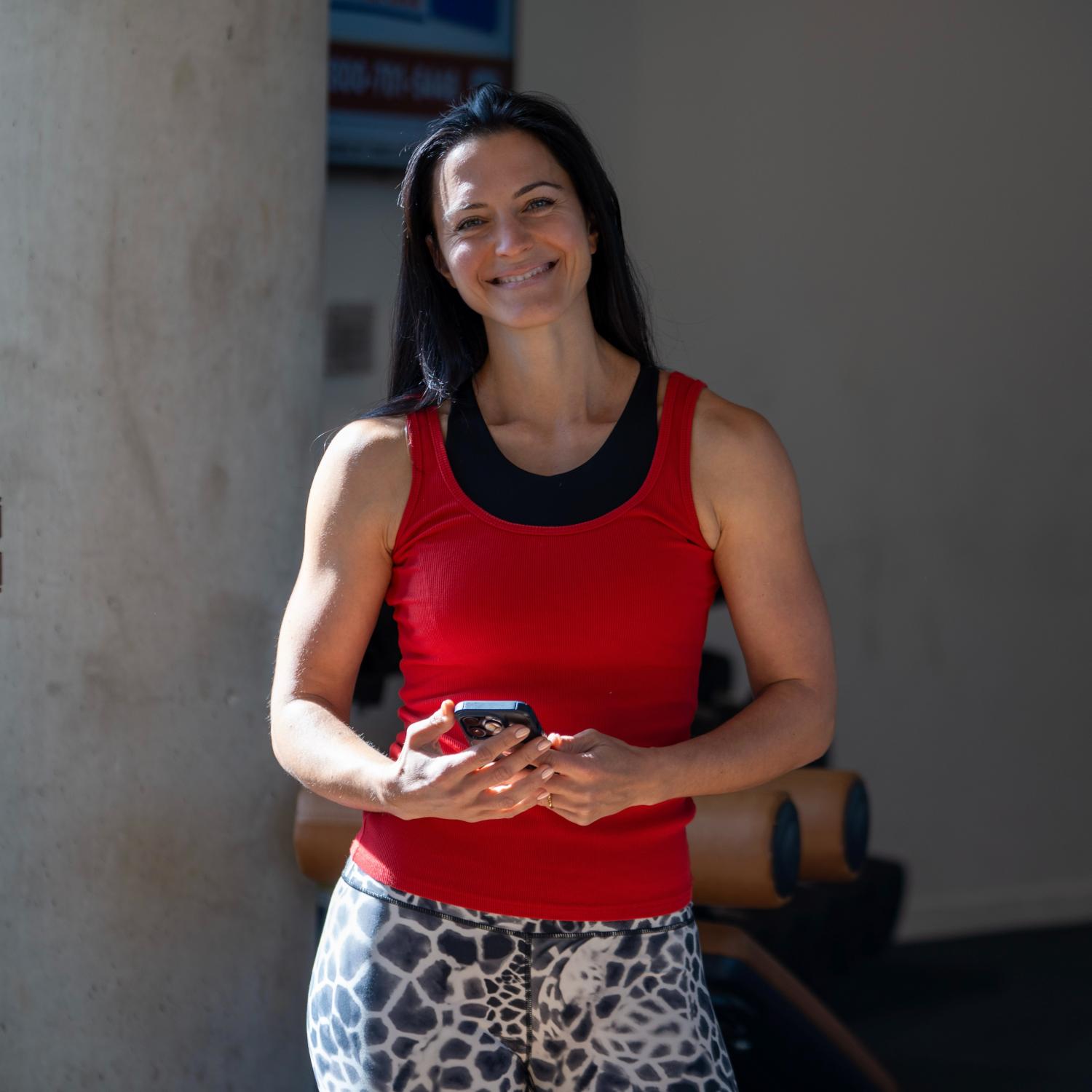 Kate Galustyan
Kate Galustyan is a strength and movement coach who helps people build confidence in their bodies through evidence-informed training. Her approach emphasizes joint stability, movement quality, and sustainable strength, combining practical education with supportive coaching that meets people where they are.
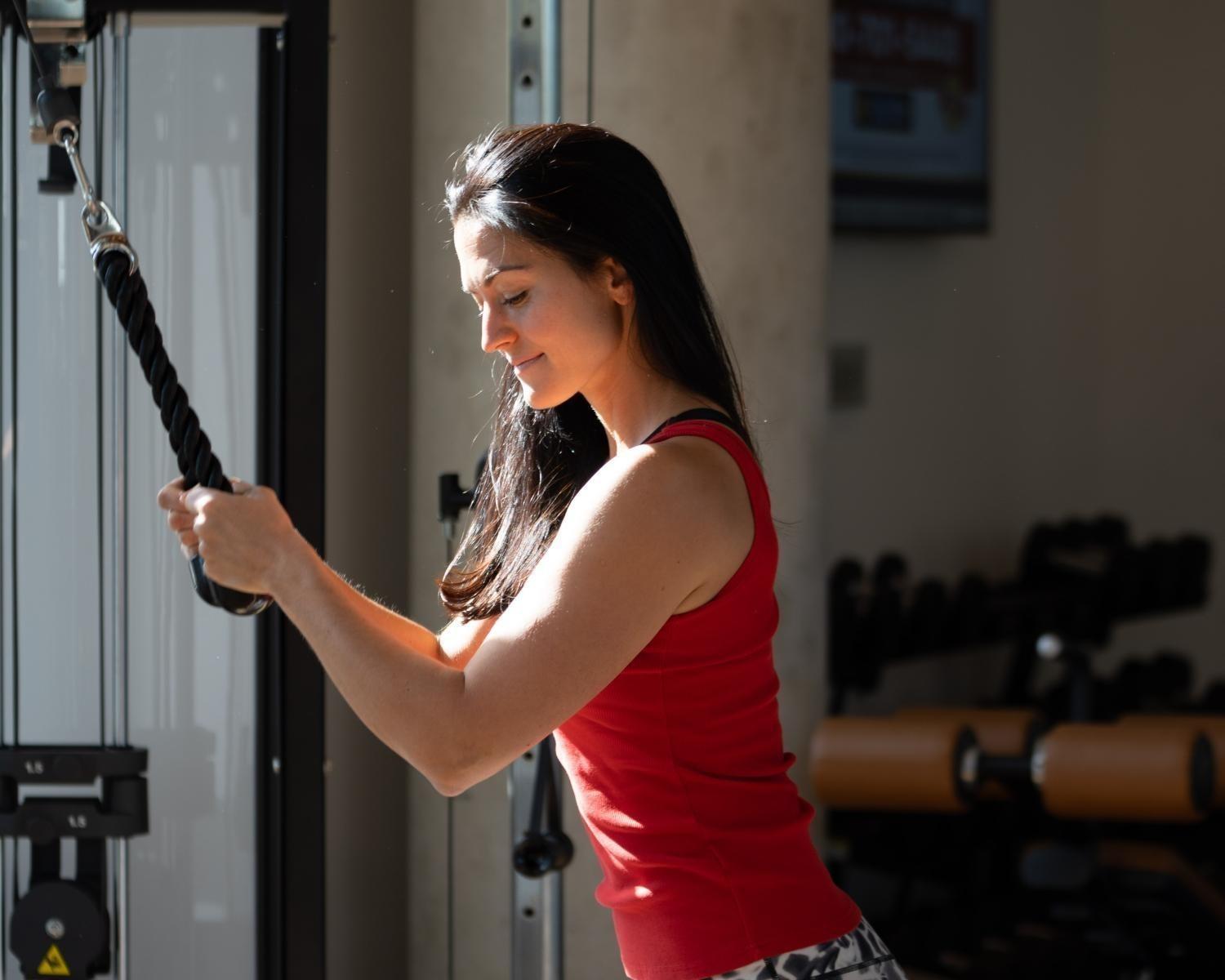
Strength isn't just about lifting heavier weights. It's about building a relationship with your body. A relationship that transforms uncertainty into understanding, hesitation into confidence, and "I don't know what my body needs" into "I trust my body and
Get Strong and Stable: Help Your Hypermobile Body Build Strength and Stability