
Earn the Right - Strength and Conditioning Primer
The Struggle Standard
Strength & Conditioning, Functional Fitness, Functional Training, General Fitness, Endurance, Tactical / Military, Tactical, Weightlifting, First Responders, Olympic LiftingEarn The Right (ETR) Strong isn't enough. Conditioned isn't enough. The athlete who can do both — under load, under fatigue, on demand — is rare, and nobody gets there by accident.
ETR is how you start. Four waves on an 8-day cycle, built to forge the engine, the positions, and the discipline that real training demands. Structured strength. Structured conditioning. Nothing random.
You're not ready for what comes after this. Not yet.... and pretending otherwise is how athletes get hurt. That's what these four waves are for.
No guesswork. No filler. Every wave has a job and so do you.
Included: → Free system guide before you spend a cent → Onboarding + nutrition guides at signup → The official Struggle Standard Test rulebook & protocol → Every day documented on youtube (in progress)
Most programs sell a month of motivation. ETR builds the athlete the next twelve months will demand.
See what you're training toward: thestrugglestandard.com
Suffer Forward.




A
ETR DAY 1 PREP
For Completion
B
Warm Up Routine
1 x 15:00
C
Front Squat
5 x 5
D
Bulgarian Split Squat
3 x 5
E1
Reverse Lunges
2 x 15
E2
Romanian Deadlift (RDL)
2 x 12
F
GHD Hip Extension
3 x 10
G1
Hanging Knee Raise
3 x 12
G2
Reverse Hyperextension
3 x 30
H1
Lying Leg Curl
1 x 100
H2
Leg Extension
1 x 100
H3
Farmers carry
1 x 250
Conditioning
I
Neck Protocol DAY 1
. Optional — 5 minutes or less. 0:00–2:00 Supine Chin Tuck Isometric Lie on back, knees bent. Gently pull chin straight back. Hold 10 seconds. 5 × 10-second holds, 5 seconds rest between. Effort: 60–70%. 2:00–3:30 Quadruped Neutral Cervical Hold Hands under shoulders, knees under hips, spine neutral. Chin tucked, eyes straight down. Hold head in perfect alignment. 3 × 20 seconds. 3:30–5:00 4-Way Manual Resistance Isometrics 10 seconds each: Front → Back → Right → Left. Use own hand as resistance at 60–70% effort.
A
ETR DAY 1 PREP
For Completion
B
Warm Up Routine
1 x 5:00
C
Front Squat
5 x 5
D
Bulgarian Split Squat
2 x 5
E1
Reverse Lunges
2 x 15
E2
Romanian Deadlift (RDL)
2 x 12
F1
Hanging Knee Raise
2 x 12
F2
Reverse Hyperextension
2 x 30
G1
Lying Leg Curl
1 x 100
G2
Leg Extension
1 x 100
G3
Farmers carry
1 x 250
Conditioning
H
Neck Protocol DAY 1
. Optional — 5 minutes or less. 0:00–2:00 Supine Chin Tuck Isometric Lie on back, knees bent. Gently pull chin straight back. Hold 10 seconds. 5 × 10-second holds, 5 seconds rest between. Effort: 60–70%. 2:00–3:30 Quadruped Neutral Cervical Hold Hands under shoulders, knees under hips, spine neutral. Chin tucked, eyes straight down. Hold head in perfect alignment. 3 × 20 seconds. 3:30–5:00 4-Way Manual Resistance Isometrics 10 seconds each: Front → Back → Right → Left. Use own hand as resistance at 60–70% effort.
A
ETR DAY 2
For Completion
B
Warm Up Routine
1 x 15:00
C
Bench Press
9 x 3
D
Kneeling Landmine Press
4 x 5
E1
Kroc Row
2 x 15
E2
Push Ups
2 x 15
F1
Lat Pulldown
3 x 8
F2
Bent Over Row
3 x 8
G1
DB Lateral Raise
3 x 10
G2
Hammer Curl
3 x 10
Circuit
H
Finisher Running Clock: (70:00-80:00) Use a light band for these movements, heavy on the pallof press Complete four rounds as a circuit, no rest between rounds. The finisher is the willingness to suffer tax, the part you came to avoid and stay for anyway. Pick an honest pace, do not blow up in the first round, and finish every rep prescribed. This is where the Standard is earned. Band Strict Press x 15 Wide Grip Band Pull Apart x 25 Band Pushdown x 25 Pallof Press (tall kneeling) x 12 ea side with 3s hold
I
Boxing
3 x 2:00
A
Warm Up Routine
1 x 5:00
B
Bench Press
9 x 3
C
Kneeling Landmine Press
2 x 5
D1
Kroc Row
2 x 15
D2
Push Ups
2 x 15
E1
Lat Pulldown
2 x 8
E2
Bent Over Row
2 x 8
F1
DB Lateral Raise
2 x 10
F2
Hammer Curl
2 x 10
Circuit
G
Finisher Running Clock: 44-50 Use a light band for these movements, heavy on the pallof press Complete 2 rounds as a circuit, no rest between rounds. The finisher is the willingness to suffer tax, the part you came to avoid and stay for anyway. Pick an honest pace, do not blow up in the first round, and finish every rep prescribed. This is where the Standard is earned. Band Strict Press x 15 Wide Grip Band Pull Apart x 25 Band Pushdown x 25 Pallof Press (tall kneeling) x 12 ea side with 3s hold
H
Boxing
3 x 2:00
A
ETR DAY 3
For Completion
B
Warm Up Routine
1 x 15:00
C
Hang Power Snatch
5 x 3
Circuit
D
Running Clock: 35:00-65:00 THE ANVIL 4-6 rounds Row 25 Cal Dumbbell Bench Press 17 reps @ 35% 1RM (moderate) Echo Bike 12 cal (moderate) DB Row 12 reps Time: Goal is 14 minutes of total work so adjust rounds as needed. Round one is the dial-setter. Pace it as if you have to do it four more times — because you do. If round five is 30+ seconds slower than round one, the early rounds were spent wrong, not the late rounds too hard. Per-round consistency beats round-one speed. Feel: Hard but repeatable, capped at the mesocycle RPE (7 / 8 / 8.5). Burning legs and lungs under already-raised lactate — never a sprint to failure. Pace: Even splits, output-governed. Round one sets the pace; hold it to round five. HR: Runs high (~85–92% max) but lags the work. Chase round-time and RPE, not the monitor.
E
Stationary Bike
1 x 20:00
Conditioning
F
Neck Protocol Day 2
Optional — 5 minutes or less. 0:00–2:00 Neck Flexion — Band or Plate Lie on bench, head off edge. Lower slowly back (2 sec), lift forward (2 sec). 2 × 15–20 reps. Chin slightly tucked throughout. 2:00–4:00 Neck Extension — Band or Plate Face down on bench, head off edge. Lower slowly (2 sec), lift to neutral only (2 sec). 2 × 15–20 reps. No hyperextension. 4:00–5:00 Band Pull-Apart — Posture Reset 25 controlled reps. Pause 1 second at contraction. Focus: mid-traps, not upper traps.
A
Warm Up Routine
1 x 5:00
B
Hang Power Snatch
5 x 3
Circuit
C
Running Clock: 20-50 THE ANVIL 4-6 rounds Row 25 Cal Dumbbell Bench Press 17 reps @ 35% 1RM (moderate) Echo Bike 12 cal (moderate) DB Row 12 reps Time: Goal is 14 minutes of total work so adjust rounds as needed. Round one is the dial-setter. Pace it as if you have to do it four more times — because you do. If round five is 30+ seconds slower than round one, the early rounds were spent wrong, not the late rounds too hard. Per-round consistency beats round-one speed. Feel: Hard but repeatable, capped at the mesocycle RPE (7 / 8 / 8.5). Burning legs and lungs under already-raised lactate — never a sprint to failure. Pace: Even splits, output-governed. Round one sets the pace; hold it to round five. HR: Runs high (~85–92% max) but lags the work. Chase round-time and RPE, not the monitor.
D
Stationary Bike
1 x 10:00
Conditioning
E
Neck Protocol Day 2
Optional — 5 minutes or less. 0:00–2:00 Neck Flexion — Band or Plate Lie on bench, head off edge. Lower slowly back (2 sec), lift forward (2 sec). 2 × 15–20 reps. Chin slightly tucked throughout. 2:00–4:00 Neck Extension — Band or Plate Face down on bench, head off edge. Lower slowly (2 sec), lift to neutral only (2 sec). 2 × 15–20 reps. No hyperextension. 4:00–5:00 Band Pull-Apart — Posture Reset 25 controlled reps. Pause 1 second at contraction. Focus: mid-traps, not upper traps.
A
ETR DAY 4
For Completion
B
Warm Up Routine
1 x 15:00
C
Resisted Sprint
4 x 15
D
Sprint
3 x 20
E
Box Jump
3 x 3
Circuit
F
Running Clock: 33-42 THE GRIP: Strict pulling is the toll road to every bar skill — pay it here. Build: Ring Row 3x8 — full pause at the top, body rigid. Standard: Strict Pull-Up 4x5 — dead hang to chin-over, no swing. Advanced: Chest-to-Bar strict singles — 6-8 crisp, full reset each. Practice cap 8:00 — the clock bounds the block; quality attempts only. Stop while it's pretty. Pick the highest tier you own with crisp reps today. Same tier start to finish — earn the next tier next wave, not mid-block.
G
Assault Bike
1 x 28:00
Circuit
H
Running Clock 70-90 LOADED CARRY TRI-SET 3 ROUNDS: CARRY → SLED → CORE 1. Front-Rack Carry: 3×40 ft, athlete-set heavy load, fast turnarounds. Elbows high, ribs down — don't lean back to hold the rack; brace and walk smooth, fast turnarounds. 2. Sled Walk: 3×60-yd pieces · 1:1 work:rest · ~50% BW Stand tall, brace, and move with control — posture is the lift. 3. Weighted Plank: 3×30–45s (↓ bodyweight / ↑ add load) Ribs down, glutes and quads locked into one rigid line — brace the plank the same way you braced the carry; add load only when the line holds. 3 rounds · carry heavy and smooth · sled at a sustainable effort · brace the core hard under accumulated fatigue. No rest between rounds.
A
Warm Up Routine
1 x 5:00
B
Resisted Sprint
3 x 15
C
Sprint
3 x 20
D
Box Jump
3 x 3
Circuit
E
Running Clock 21-35 LOADED CARRY TRI-SET 3 ROUNDS: CARRY → SLED → CORE 1. Front-Rack Carry: 2×40 ft, athlete-set heavy load, fast turnarounds. Elbows high, ribs down — don't lean back to hold the rack; brace and walk smooth, fast turnarounds. 2. Sled Walk: 2×60-yd pieces · 1:1 work:rest · ~50% BW Stand tall, brace, and move with control — posture is the lift. 3. Weighted Plank: 2×30–45s (↓ bodyweight / ↑ add load) Ribs down, glutes and quads locked into one rigid line — brace the plank the same way you braced the carry; add load only when the line holds. 2 rounds · carry heavy and smooth · sled at a sustainable effort · brace the core hard under accumulated fatigue. No rest between rounds.
F
Assault Bike
1 x 25:00
A
ETR DAY 5
For Completion
B
Warm Up Routine
1 x 15:00
C
Speed Back Squat
8 x 3
D
Deadlift Speed Pull
8 x 1
E1
Front Squat
2 x 15
E2
Glute-Ham Raise
2 x 15
E3
Reverse Hyperextension
2 x 10
F1
Copenhagen Plank
4 x 5
F2
Lying Leg Curl
4 x 10
F3
Calf Raise
4 x 12
G
Offset Carry
2 x 80
Circuit
H
Running Clock 75-85 FINISHER Band GM 1×200, max band (light band where you can do all 200 reps straight through but the last 50 reps start to burn. Soft knees, hinge back against the band — feel the hamstrings; the band peaks at the top, snap the hips through. Immediately into Weighted Hollow Rocks 4×20, Plate at chest No swing — curl the pelvis up and control the lower half; if you're swinging, it's only hip flexors. Rest :45
Conditioning
I
Neck Protocol Day 3
DAY 3: LATERAL + ROTATIONAL STRENGTH 0:00–2:00: Lateral Flexion (Right + Left) Setup: - Lie sideways on bench OR use band - Head off edge Execution: - Lower ear toward shoulder - Lift back to neutral Tempo: 2 sec down 2 sec up Prescription: 2 × 12–15 each side 2:00–4:00: Banded Cervical Rotation Setup: - Band anchored at eye level - Loop around back of head Execution: - Rotate head slowly against band - Return controlled Prescription: 15 reps per side Slow and smooth. 4:00–5:00: Chin Tuck Hold (Standing Against Wall) - Back, hips, and head against wall - Pull chin back - Hold 30–40 seconds
A
Warm Up Routine
1 x 5:00
B
Speed Back Squat
8 x 3
C
Deadlift Speed Pull
8 x 1
D1
Front Squat
2 x 15
D2
Glute-Ham Raise
2 x 15
D3
Reverse Hyperextension
2 x 10
E1
Copenhagen Plank
4 x 5
E2
Lying Leg Curl
4 x 10
E3
Calf Raise
4 x 12
F
Offset Carry
2 x 80
Conditioning
G
Neck Protocol Day 3
DAY 3: LATERAL + ROTATIONAL STRENGTH 0:00–2:00: Lateral Flexion (Right + Left) Setup: - Lie sideways on bench OR use band - Head off edge Execution: - Lower ear toward shoulder - Lift back to neutral Tempo: 2 sec down 2 sec up Prescription: 2 × 12–15 each side 2:00–4:00: Banded Cervical Rotation Setup: - Band anchored at eye level - Loop around back of head Execution: - Rotate head slowly against band - Return controlled Prescription: 15 reps per side Slow and smooth. 4:00–5:00: Chin Tuck Hold (Standing Against Wall) - Back, hips, and head against wall - Pull chin back - Hold 30–40 seconds
A
ETR DAY 6
For Completion
B
Warm Up Routine
1 x 15:00
C
Close Grip Bench Press
5 x 5
D
Push Press
4 x 5
E
DB Z Press
3 x 8
F1
Dips
3 x 15
F2
Cuban Press
3 x 10
G1
Seated Cable Row
3 x 10
G2
Straight Arm Pulldown
3 x 10
G3
DB Roll Back
3 x 10
Circuit
H
Running Clock: 75:00-90:00 FINISHER: 4 SETS — MINIMAL REST, BACK-TO-BACK. Seated OH Band Tricep Extension: 4×30, max band Seated kills the leg drive — ribs down, press straight up; if you arch back, lighten it. Lying Face-Up Banded Reverse Fly: 4×30, max band Drive the arms out and back in a wide arc and squeeze the rear delts — elbows soft, traps quiet, no jerking the band. Standing Heavy Band Crunch: 4×30, max band Anchor high, crunch ribs to hips against the band — control the return, never let the band yank you upright; hard contractions.
A
Warm Up Routine
1 x 5:00
B
Close Grip Bench Press
5 x 5
C
Push Press
4 x 5
D
DB Z Press
2 x 8
E1
Dips
2 x 15
E2
Cuban Press
2 x 10
F1
Seated Cable Row
2 x 10
F2
Straight Arm Pulldown
2 x 10
F3
DB Roll Back
2 x 10
Circuit
G
Running Clock: 54-60 FINISHER: 2 SETS — MINIMAL REST, BACK-TO-BACK. Seated OH Band Tricep Extension: 2×30, max band Seated kills the leg drive — ribs down, press straight up; if you arch back, lighten it. Lying Face-Up Banded Reverse Fly: 2×30, max band Drive the arms out and back in a wide arc and squeeze the rear delts — elbows soft, traps quiet, no jerking the band. Standing Heavy Band Crunch: 2×30, max band Anchor high, crunch ribs to hips against the band — control the return, never let the band yank you upright; hard contractions.
A
ETR DAY 7
For Completion
B
Warm Up Routine
1 x 15:00
C
Power Clean
5 x 3
Circuit
D
Running Clock: 30:00-80:00 50 minutes Zone 2 — aerobic base. RPE 3–4/10, ~60–70% max HR: conversational, nose-breathing the whole way. Goal: build the easy engine — keeping it genuinely easy is the discipline. Zone 2 is the easy aerobic gear — conversational the whole way, full sentences, never gasping (nose-breathing is a fair gauge). The work here is the discipline to keep it slow: this pace builds the engine — bigger stroke volume, denser mitochondria, more capillaries —adaptations that are slow to earn and the program won't let you skip. It's the aerobic base CHT later builds on; the easy miles now are what let the hard days land.
Circuit
E
Running Clock: 80-95 MENTAL EDGE / 3 Round with 60s rest 3 Rounds ~12 MIN Echo Bike :80 hard Burpee :80 steady Rest :60 Three rounds of focused anaerobic work, separated by 60-second rest. Each round is short, fast, and earned — the rest is part of the stimulus, not a recovery break. Keep the rest honest. Perform each exercise for max distance/reps in the allotted time. This is the piece I want you to send it on. Break new ground in your mind.
F
Plate Pinch Grip Hold
A
Warm Up Routine
1 x 5:00
B
Power Clean
5 x 3
Circuit
C
Running Clock: 20-50 30 minutes Zone 2 — aerobic base. RPE 3–4/10, ~60–70% max HR: conversational, nose-breathing the whole way. Goal: build the easy engine — keeping it genuinely easy is the discipline. Zone 2 is the easy aerobic gear — conversational the whole way, full sentences, never gasping (nose-breathing is a fair gauge). The work here is the discipline to keep it slow: this pace builds the engine — bigger stroke volume, denser mitochondria, more capillaries —adaptations that are slow to earn and the program won't let you skip. It's the aerobic base CHT later builds on; the easy miles now are what let the hard days land.
Circuit
D
Running Clock: 50-65 MENTAN EDGE / 3 rounds with 60s rest 3 Rounds ~12 MIN Echo Bike :80 hard Burpee :80 steady Rest :60 Three rounds of focused anaerobic work, separated by 60-second rest. Each round is short, fast, and earned — the rest is part of the stimulus, not a recovery break. Keep the rest honest. Perform each exercise for max distance/reps in the allotted time. This is the piece I want you to send it on. Break new ground in your mind.
E
Plate Pinch Grip Hold
 Alexander Burgoyne
“Coach with a B.S. in Kinesiology (Exercise Science) and 18 years of experience as an athlete. I’ve trained, competed, and learned through trial, error, and consistency. My coaching is built on discipline, intelligent programming, and preparing athletes for long-term progress—not shortcuts.”
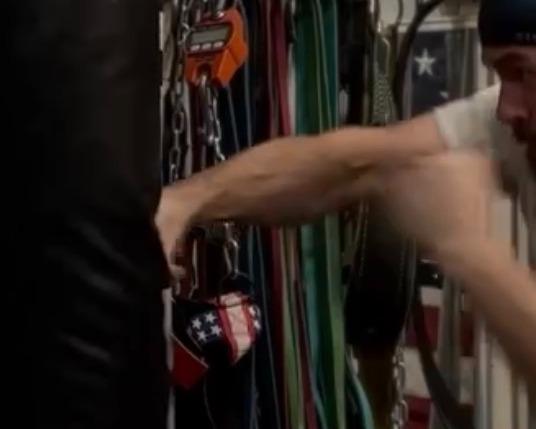
This program isn’t about shortcuts or hype. It’s about doing the work that prepares you for more demanding training. Show up, execute with discipline, recover properly—and earn the right to move forward.
Get Earn the Right - Strength and Conditioning Primer